By Mehrab Sarjov
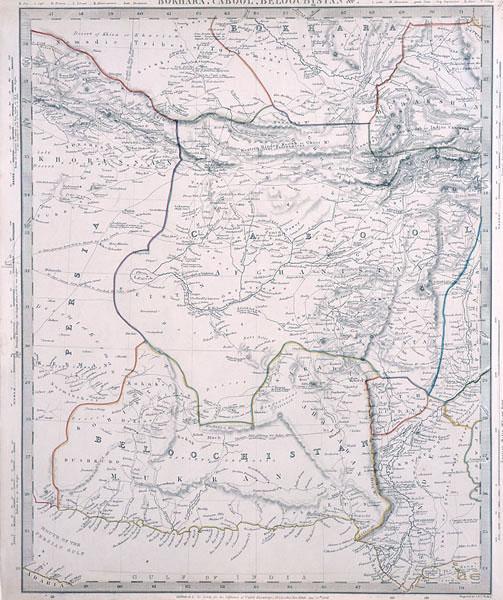
The Baluch in Iranian-occupied Baluchistan believe that Iran's days are numbered; they think that contemporary Iran has weakened. A nation-state is a political entity in which a single ethnic group and cultural population live within the same boundaries. However, Iran does not qualify as a nation-state; it is a multi-national state with various ethnic groups. The basic argument is that Baluch, Kurds, Arabs, Turks, Turkman, Persians, and others are nations that live within defined the historical homelands; they have their own culture, language, myth, and history. Within the Baluch camp, we assert that the boundaries dividing Baluchistan into three parts are colonial; the Baluch nation has never recognised the legitimacy of these borders.
On the other hand, Tehran cannot impose its definition of Iranian identity on the Baluch. The state of Iran is the remnant of the old Persian-Safavid Shiite empire and the result of a national-building attempt by Reza Shah with the help of European powers to protect their interests in the region. Reza Shah conquered small neighbouring nations, and in some cases parts of larger nations, and incorporated them into Persia under Persian monarchical rule. To create a single Persian nation, the dominant group in Iran pursued an assimilation policy to subdue the non-Persian groups; however, non-Persian nations resisted these policies. They have preserved their language, culture, and national identities; in other words, they refused to assimilate into Persian culture and language.
Fifty-five years after the 1979 revolution, Shiite revolutionary leaders have sought to extend their influence and religious dominance beyond the country's borders.
Throughout history, the Persians often invaded their neighbours when they felt strong enough. However, they typically made little effort to impose their culture and language on those they conquered. Like many other empires, their main goals were to collect tribute, acquire enslaved people, and obtain labour. The most recent Persian campaign had different aims: to occupy and retain territory, assimilate smaller nations into Persian culture and the Shiite religion, and to establish a unified nation.
Reza Shah was encouraged by certain Persian moderates and European powers to implement reforms in predominantly Shiite Persia. His most significant achievement was the establishment of a centralised state, along with the introduction of policies influenced by Nazi ideology. However, his actions led to discontent among his allies and ultimately resulted in pressure from these European powers for him to abdicate in favour of his son. Reza Shah was exiled until his death.
Reza Shah left the task of nation-building to his son, Mohammad Reza Shah. The Shah and his advisers adopted a French model of civic nationalism combined with Persian chauvinism. However, Persian elites struggled to replicate this model successfully, leading to poor implementation and ultimately failure. This failure of civic nationalism in Iran contributed to the rise of Khomeini's Shiite fundamentalist regime.
Civic nationalism is not suitable for a multi-national state like Iran, where the various nations often share more enmity than common ground. In today's world of mass media and the internet, it is unrealistic to believe that a single powerful nation can completely eradicate weaker or less resourceful nations. Human beings hold numerous loyalties, including religion, language, culture, and heritage, which can empower them to resist oppression. In the case of the Baloch people, their religion and culture have been significant barriers against Persian oppression, even when others have remained silent in the face of state assimilation policies.
Broadly speaking, the Persian elites sought to standardise and homogenise their language, history and myths into a single Persian nation; however, they failed, and Iran has become a failed state. The state elites have created a single code of law based on Shiite Sharia law throughout the multi-national territory; the creation of a single taxation system centralised and controlled by Shiite clergy in Tehran has failed.
Law and order in Baluchistan is largely absent; the general public does not follow the law, and government officials seem either unable or unwilling to enforce it in the region. Many citizens perceive no distinction between goons and security forces, as both groups are seen as exploitative and robbing the public.
There is no sense of loyalty to the state; one group's interests conflict with those of other groups; and there is no accountability. Baluch, Kurds, Arabs, Turkman, and, to a lesser extent, the Azari Turk are all alienated.
We in Baluchistan argue that, contrary to Persian elites' claim, Iran is not a homogeneous state and a product of history where people lived together and constituted a modern state through a social contract where the state provides effective education, a labour market, healthcare, insurance, protects individual rights, religious rights, women's rights and so forth: Its product of persian conquest that failed to recognise the otherness within state.
The Baluch, Kurds, Arabs, Turks, Turkmen, Gilaki, and Mazandarani are indigenous peoples who have long inhabited Iran. They have cultivated the land and established villages and civilisations in their respective homelands. Unfortunately, these groups have faced discrimination, been denied cultural rights, and had their existence overlooked for far too long.
In Baluchistan, we believe that Iran functions as a Safavid Shiite empire, where the king of Iran was historically viewed as the leader of Shiites worldwide. This role has since been replaced by an Ayatollah, who now acts as the leader of Shiites globally. We argue that the state needs to dissolve into several smaller states based on demarcated cultural boundaries. Failing to acknowledge the necessity for Iran’s disintegration may lead to dysfunction in the Middle East and perpetuate endless conflict in the region. Iran is the last remaining traditional power that claims to be an empire while asserting sovereignty over other states.
Iran is multi-national, and every nation within its borders has the right to self-determination. The Baluch, Kurds, Arabs, Turks, and Turkmen deserve this right, which the international community should recognise.
Evidence suggests there is little erosion of popular national identities and the right to self-determination. Upholding this national right is the only viable path to peace, security, economic development, and trade among nations in the region, which Persian elites have held hostage to their ambitions.
We believe the state of Iran is beyond reform to achieve internal peace and regional security; it must instead be dissolved into several rational states.




No comments:
Post a Comment